

Falls are among the most serious and preventable threats facing people living with dementia. Unlike the general aging population, individuals with dementia face compounding risks — impaired spatial awareness, altered depth perception, and disrupted judgment — that make an otherwise manageable hazard genuinely dangerous. A proactive, structured approach to fall prevention isn't optional. It's essential.
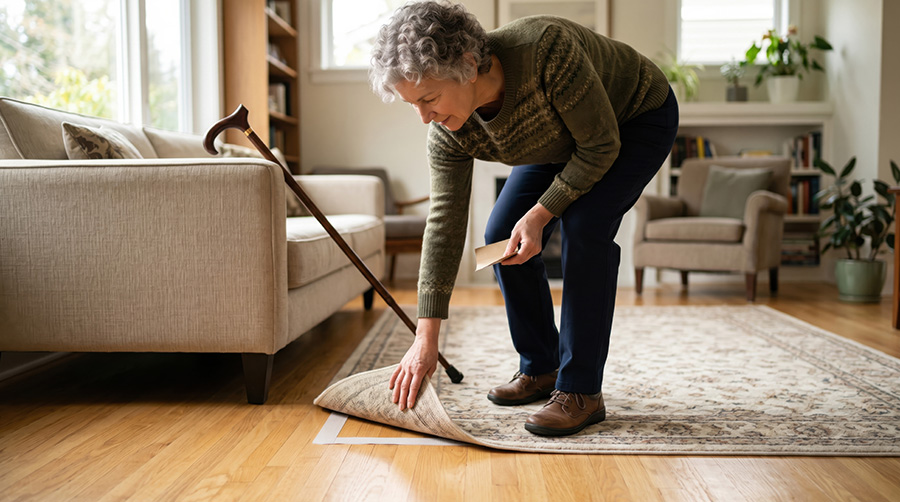
Before any modification can be made, caregivers need an honest, room-by-room audit of the home environment. The goal is simple: eliminate what shouldn't be there and stabilize what should. That means clearing cluttered pathways, securing loose rugs with non-slip backing or adhesive, and ensuring every area of the home — particularly hallways, staircases, and bathrooms — is well-lit and immediately navigable.
Floors should be kept dry and free from obstructions. Cords, low furniture, and loose objects are among the most common culprits in fall incidents. What seems like minor clutter to a caregiver can be a genuine obstacle to someone whose spatial processing is compromised.
Environmental audits identify the problems; targeted modifications solve them. Handrails on both sides of staircases and along hallways provide the physical anchoring points that support safe, independent movement. In the bathroom — where wet surfaces and the physical demands of bathing and toileting converge — strategically placed grab bars near the toilet, tub, and shower are non-negotiable.
Flooring choices matter more than most caregivers realize. Non-slip surfaces like cork or rubber significantly reduce slip risk in moisture-prone areas. Equally important: avoid waxing or polishing floors, as these treatments introduce dangerous slickness underfoot. One often-overlooked design strategy is the use of contrasting colors between walls and floors. For someone with dementia, visual contrast is a functional tool — it helps distinguish boundaries, identify transitions between spaces, and flag potential hazards before they become accidents.
A modified environment reduces risk, but it doesn't address the physical capabilities of the person living in it. Regular, appropriate physical activity is one of the most evidence-supported interventions for fall prevention. Walking, stretching, and low-impact movement like chair yoga all contribute to the baseline stability that keeps people upright.
Strength training — using resistance bands, light weights, or bodyweight exercises — builds the muscular foundation that supports balance during everyday movement. Dedicated balance exercises, such as single-leg standing, heel-to-toe walking, or work on unstable surfaces like foam pads, can meaningfully improve proprioception and reduce fall risk over time. Any exercise program should be developed in consultation with a healthcare provider who understands the individual's current condition and limitations.
Assistive devices — canes, walkers, or wheelchairs — should never be viewed as a concession. They are precision tools that extend safe, independent mobility.
Polypharmacy is a significant and frequently underestimated contributor to falls in people with dementia. Certain medications and drug interactions can affect balance, coordination, and alertness. A thorough medication review with a physician or pharmacist should be part of any comprehensive fall prevention plan — not an afterthought.
No two people with dementia experience the condition in exactly the same way. Effective fall prevention demands a tailored approach, not a checklist applied uniformly. Partnering with occupational therapists, nurses, and other healthcare professionals allows caregivers to develop strategies that match both the person's current abilities and the specific layout and demands of their home.
Caring for a loved one with Alzheimer's disease or another form of dementia? Parker's Willing Hearts, Helpful Hands program offers free in-home assessments, caregiver support groups, education and training, volunteer companions, and caregiver wellness programs — at no cost to families. Call (877) 727-5373 or (516) 586-1507, or apply online.
.svg)

.svg)
.svg)